

Acumatica for diversified groups
One platform for F&B, distribution, manufacturing, construction and services. Each subsidiary runs its industry processes; the group consolidates on one dataset.

Challenges of diversified groups
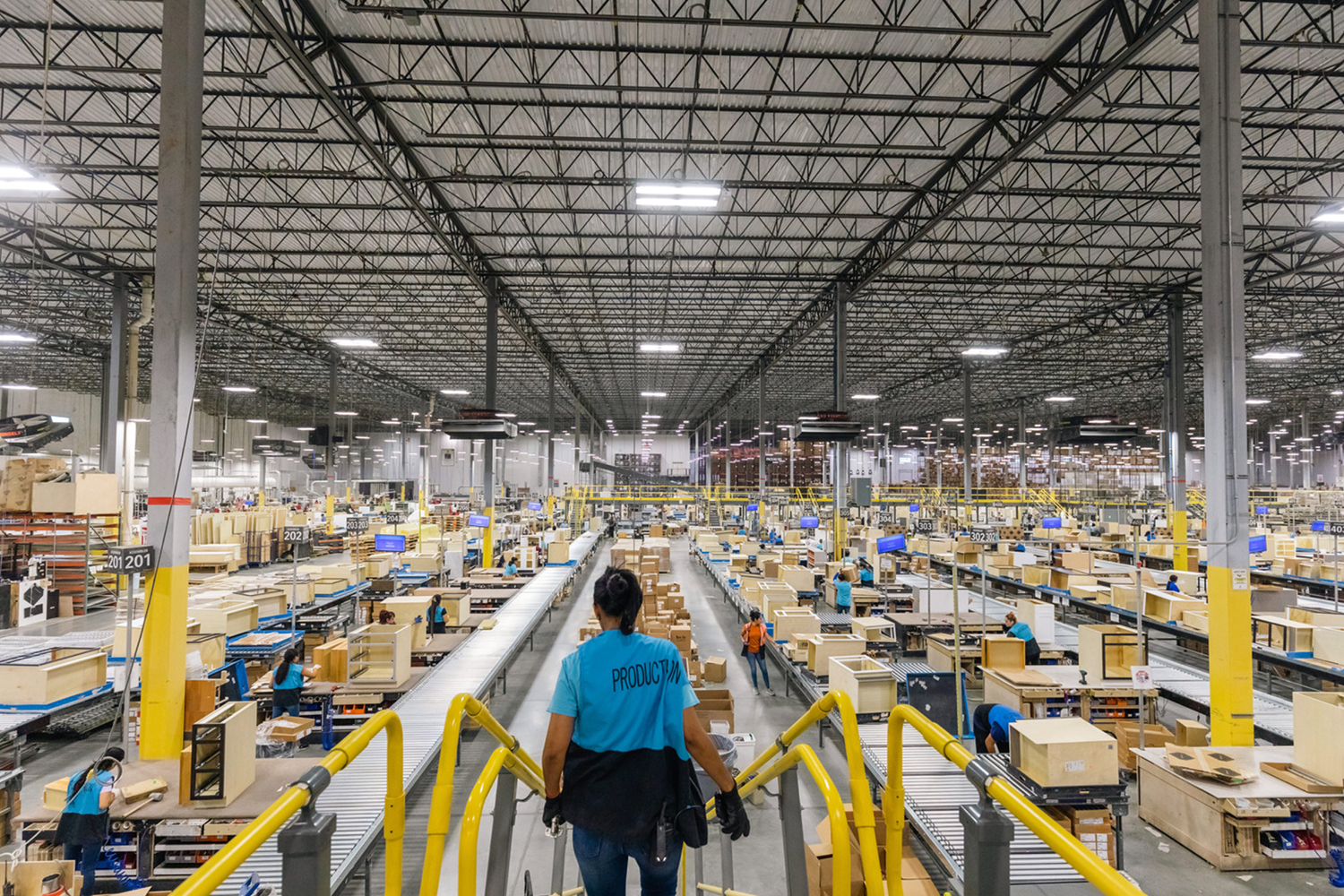
As groups expand into new industries, each subsidiary often picks its own software. The larger the group, the higher the cost of coordination and consolidation.
One system per industry
Manufacturing, distribution, F&B and construction run on different systems with disconnected data.
Intercompany flows
The F&B chain buys from group manufacturing and distribution companies, recorded on both sides and eliminated.
Slow consolidation
Group reports are assembled from many systems, taking days each period.
Different standards
Charts of accounts, periods and approvals are not aligned.
Fragmented IT spend
Many licenses, implementation partners and security standards.
Board requirements
VAS and IFRS reporting traceable to each company’s source documents.
The value chain within the group
Processing, packing
Production orders, BOMs, lots and expiry.
Logistics, wholesale
Intercompany sales orders create internal transactions automatically.
Retail stores
Recipes, POS, per-store P&L.
Consolidation
Eliminations, VAS and IFRS reporting.
Multi-entity and consolidation: the biggest difference from fragmented software
Large F&B chains rarely have one legal entity: a brand-holding company, a central kitchen company, and companies running stores or franchises. With separate accounting software per company, every intercompany transaction is entered twice and consolidated reports are assembled in Excel. Acumatica manages an unlimited number of related companies in one system.
Central kitchen
Produces semi-finished goods and transfers them to stores owned by another company.
Intercompany transaction
The transfer creates the intercompany transaction, with due-to and due-from entries on both sides.
Store operating companies
Food cost, intercompany payables and P&L land in the right entity.
Consolidated reporting
Intercompany transactions eliminated automatically, with drill-down from group to each company.
| Process | Common approach with separate software per company | Acumatica F&B Edition by S4 |
|---|---|---|
| Legal entities | One database per company; a new company means another system | Unlimited related companies in one system, sharing chart of accounts, periods and currencies where needed |
| Intercompany transactions | Entered twice in two companies, intercompany balances matched at month-end | Due-to and due-from entries created automatically; a purchase order in one company can create a sales order in another |
| Transfers between entities | Manual issue notes, receipts and internal invoices | Transfers between warehouses of different companies generate intercompany transactions, keeping each company’s reports accurate |
| Centralized purchasing and payments | Each company buys and pays on its own | One company buys or pays on behalf of others while costs and profit stay with the originating company; shared costs allocated by rules |
| Consolidated reporting | Export each company to Excel, merge and eliminate by hand | Consolidated statements with automatic intercompany elimination and drill-down from group to company |
| Multi-currency | Manual conversion when reporting to a foreign parent | Exchange rates and automatic currency conversion with consistent reporting across entities |
| Control | Permissions per database | Permissions by company and branch; period close per company; audit trails |
Multi-entity capabilities as described by Acumatica: Acumatica Inter-Company Accounting. The “common approach” column describes the situation where each entity runs its own accounting software.
One platform, many industries
Subsidiaries use Acumatica industry capabilities while sharing the group’s financial platform, permissions and reporting.
F&B and retail
Recipes, POS-driven deduction, central kitchen, per-store P&L.
Distribution
Logistics, wholesale orders, pricing and promotions by channel.
Manufacturing
Multi-level BOMs, MRP, production orders and costing.
Construction and projects
Project budgets, subcontracts, change orders, progress billing.
Consolidated finance
Multi-company, intercompany, VAS alongside IFRS.
Vietnam compliance
Circular 99, e-invoicing, banking, VN Payroll.
One solution, many chain models
Coffee & bubble tea chains
What should an ERP for coffee and bubble tea chains do?
Restaurant & QSR chains
How is a restaurant chain ERP different from restaurant management software?
Bakery chains
What capabilities does a bakery chain need in an ERP?
Multi-brand groups
What kind of ERP does a multi-brand F&B group need?
Franchise chains
What solution does a franchise F&B chain need?
Central kitchen & supply companies
Why should a central kitchen be managed like a separate company?
F&B companies worldwide that chose Acumatica
The results below are published by Acumatica in its customer stories. S4 Consulting was not involved in these projects; in Vietnam, S4 implemented Acumatica for An Nhien Cafe.
A Priori Specialty Foods
- 3.5 hours a week saved by fulfillment
- 6 hours a week saved by sales
- 30% less time processing price changes
Read the customer story ↗
Cave Direct
- Warehouses consolidated from 4 to 1
- 35% increase in direct-to-consumer sales
- Real-time stock visibility for sales
Read the customer story ↗
Cottingham
- ERP access anytime in the browser, including Mac Safari
- Cost savings from unlimited user pricing
- Less IT infrastructure, always on the latest version
Read the customer story ↗
See it in Acumatica
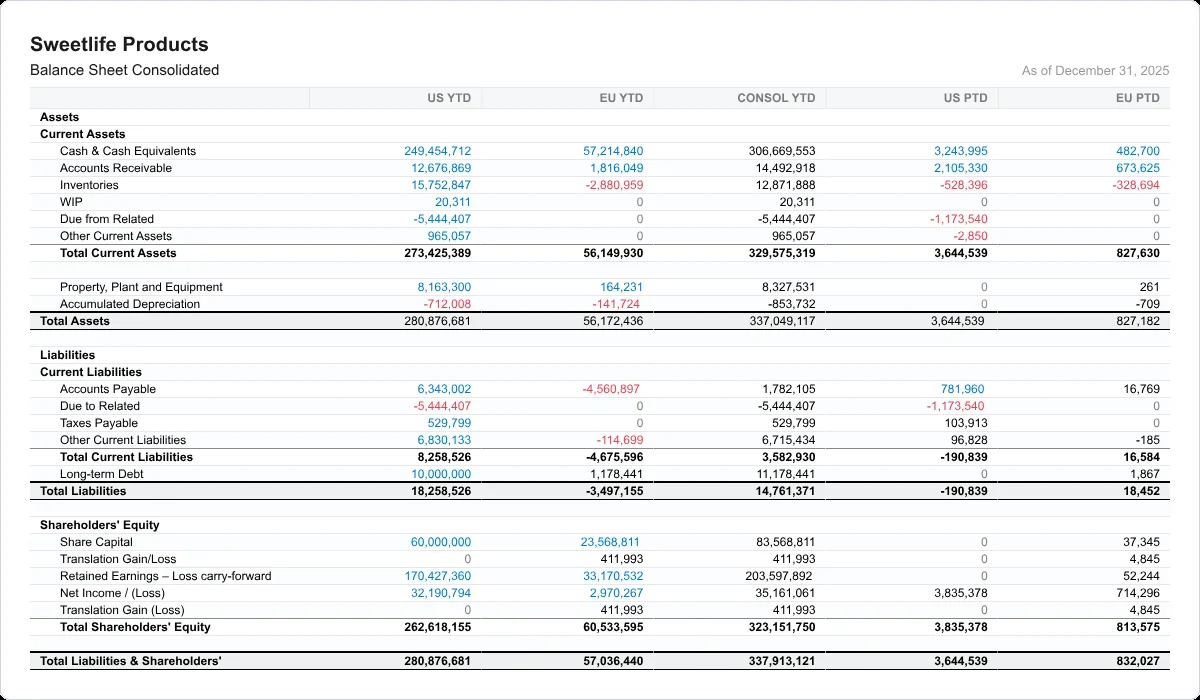
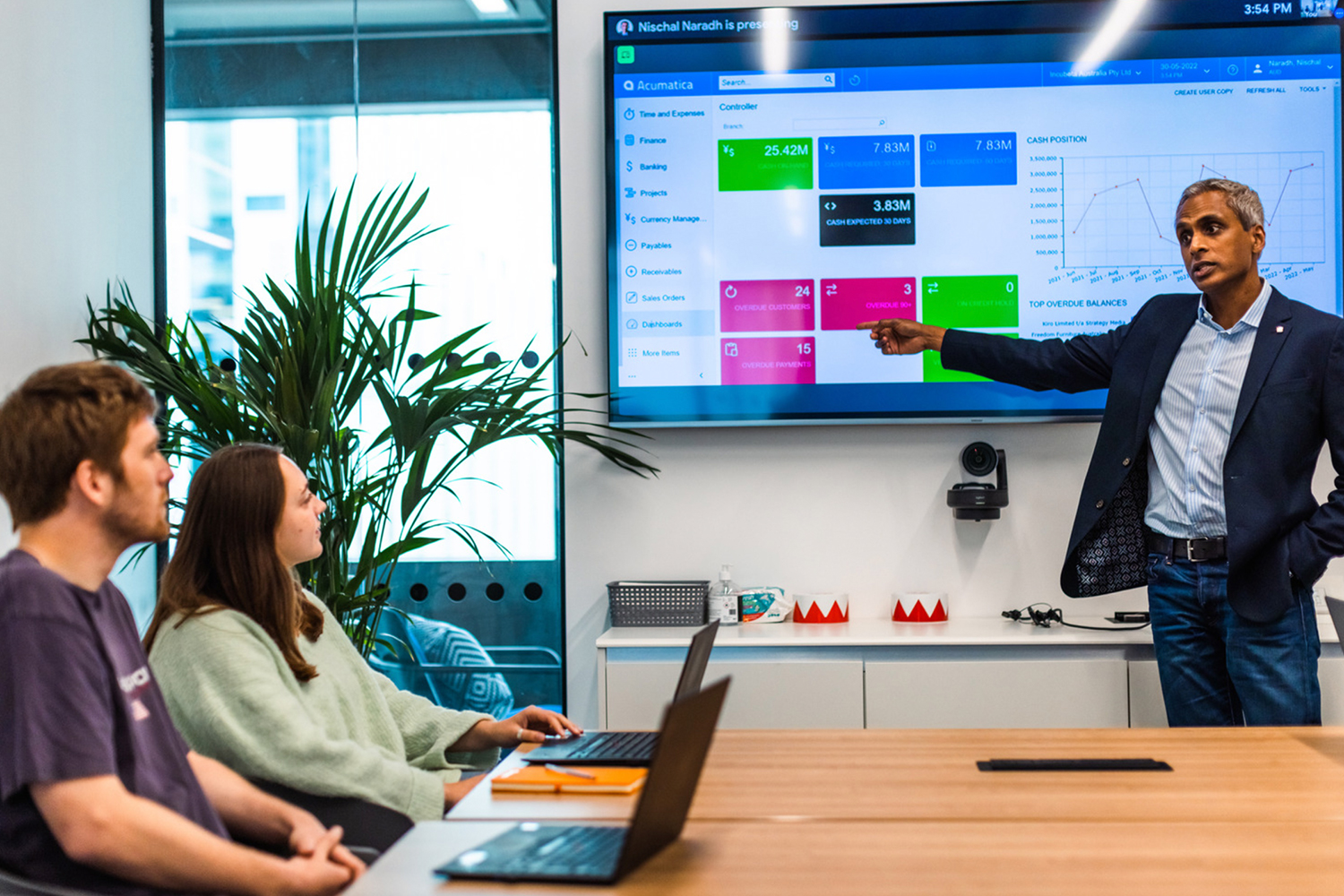
Acumatica screenshots with demo data.
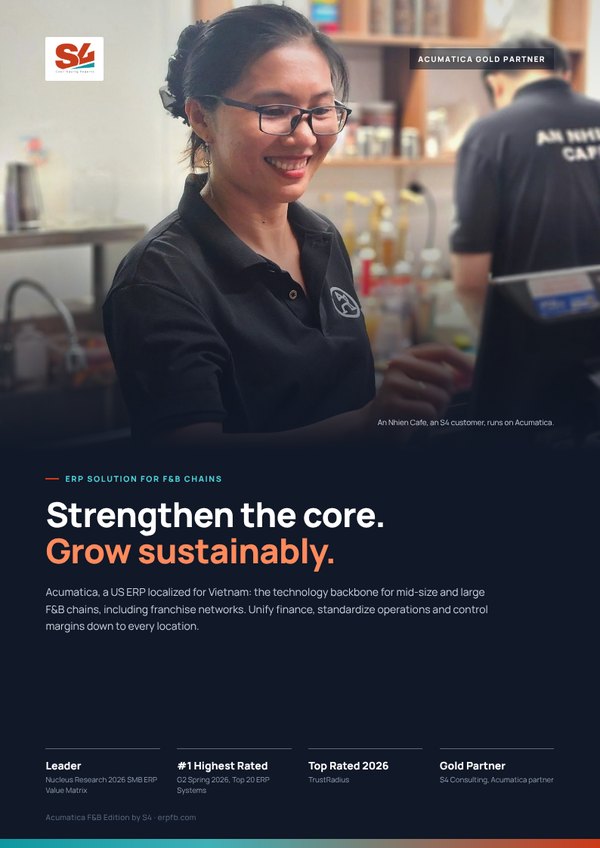
Acumatica F&B Edition by S4 brochure
Six pages for leadership: four capability layers, solutions by chain model and franchising, Vietnam compliance, the xRP platform, the An Nhien Cafe story and the Fast & Saving roadmap.
Frequently asked questions
Can subsidiaries in different industries share one system?
How are transactions between subsidiaries handled?
Must all subsidiaries move to Acumatica at once?
What if the parent company is overseas?

 Gold Partner
Evaluate against your operating model
Book an Executive Briefing with Lac Pham or Nu Huynh to discuss goals, scope and the right rollout roadmap for your diversified groups.